4th of 47 teams at the Gen AI Summit Hackathon
Last weekend I competed in the Gen AI Summit Hackathon in Athens with Marco Serat. Two people, 36 hours, one project: FIREYE.
47 teams submitted. 9 reached the semifinals. 4 pitched in the finals. We were one of the four, and we finished 4th.
Prizes went to 1st through 3rd, so no prize.
The weekend
The build ran Saturday 14 to Sunday 15 November at Athens LifeTech Park in Spata. The event was organised by Polymath Labs as part of the 5th GenAI Summit SE Europe. The theme was "Agents at Work": build something people and agents want.
Semifinal pitches were Sunday night. On Monday the four finalists pitched on the GenAI Summit stage at SNFCC, the Stavros Niarchos Foundation Cultural Center. In the audience: Lars Rasmussen, co-founder of Google Maps, judging. Plus investors, founders and the summit crowd.
The experience was amazing. I met a lot of great people.
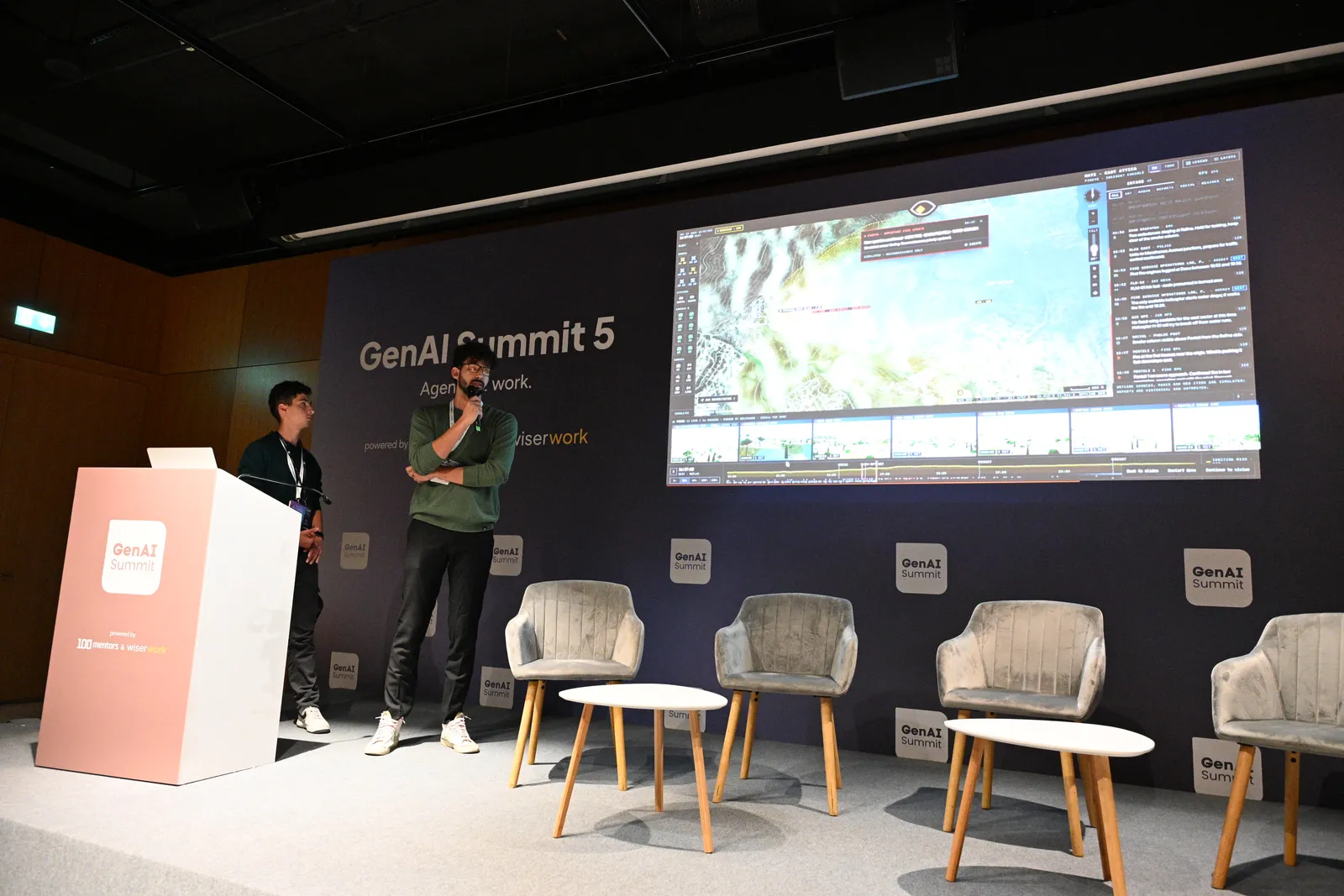
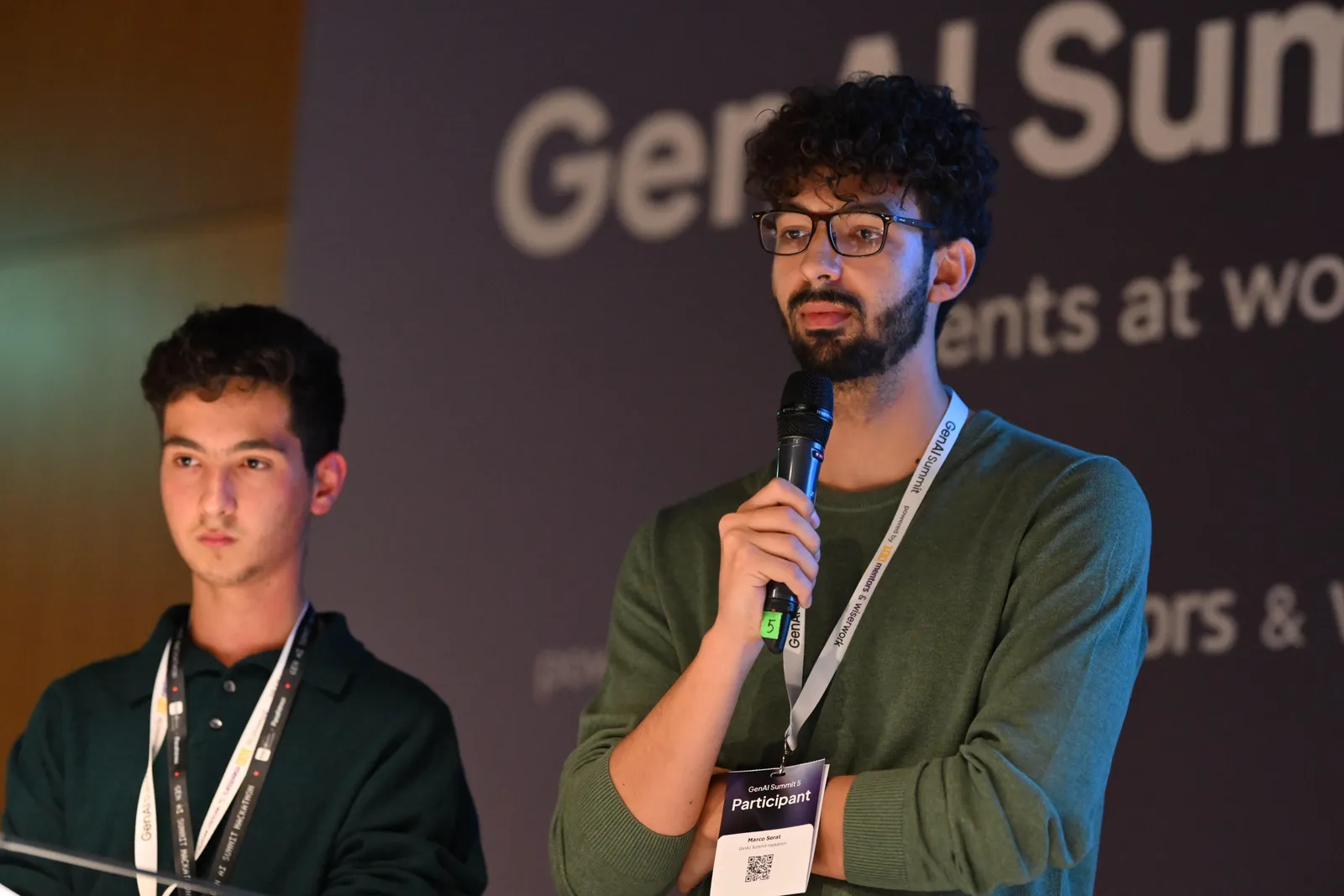
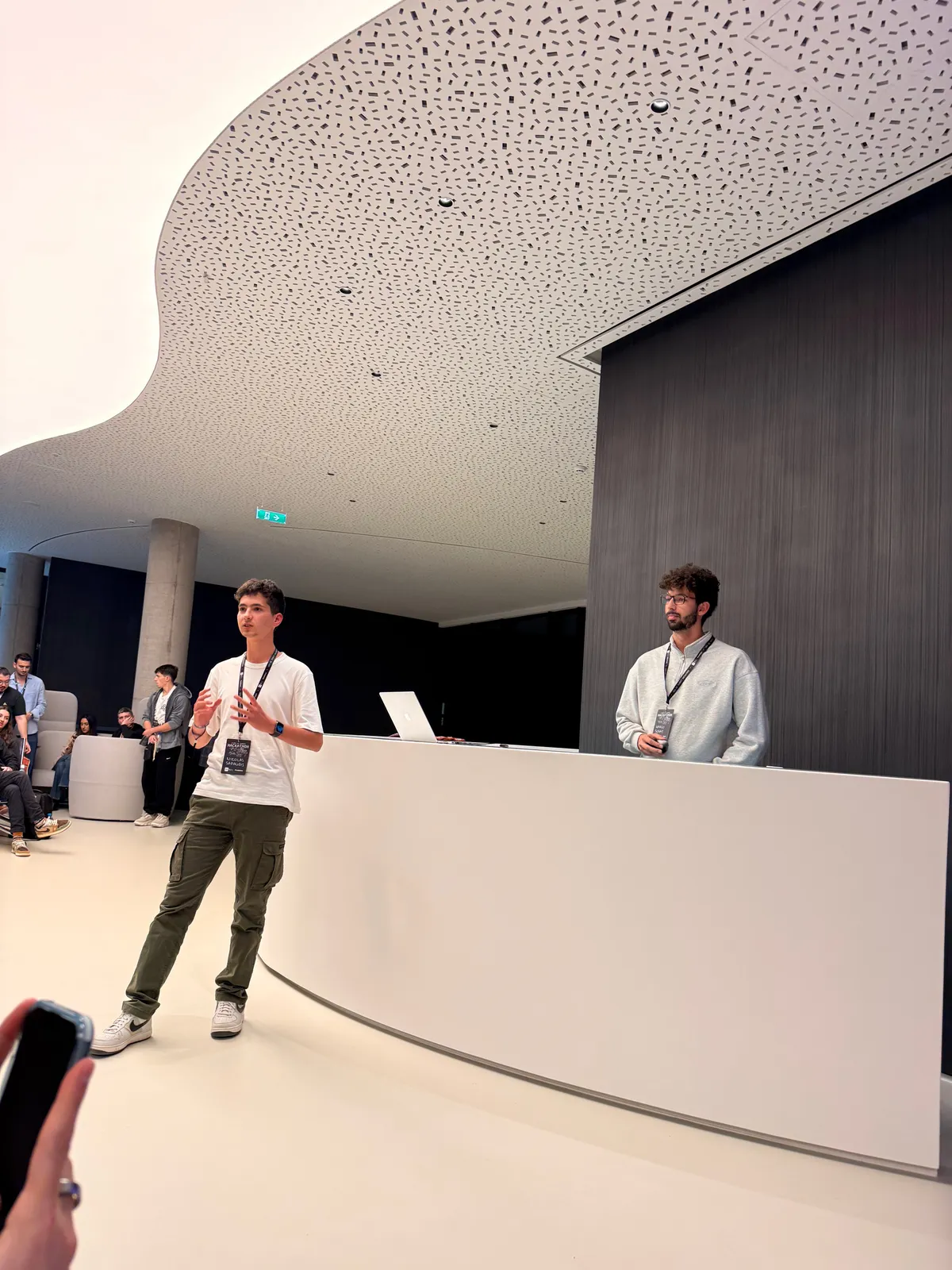
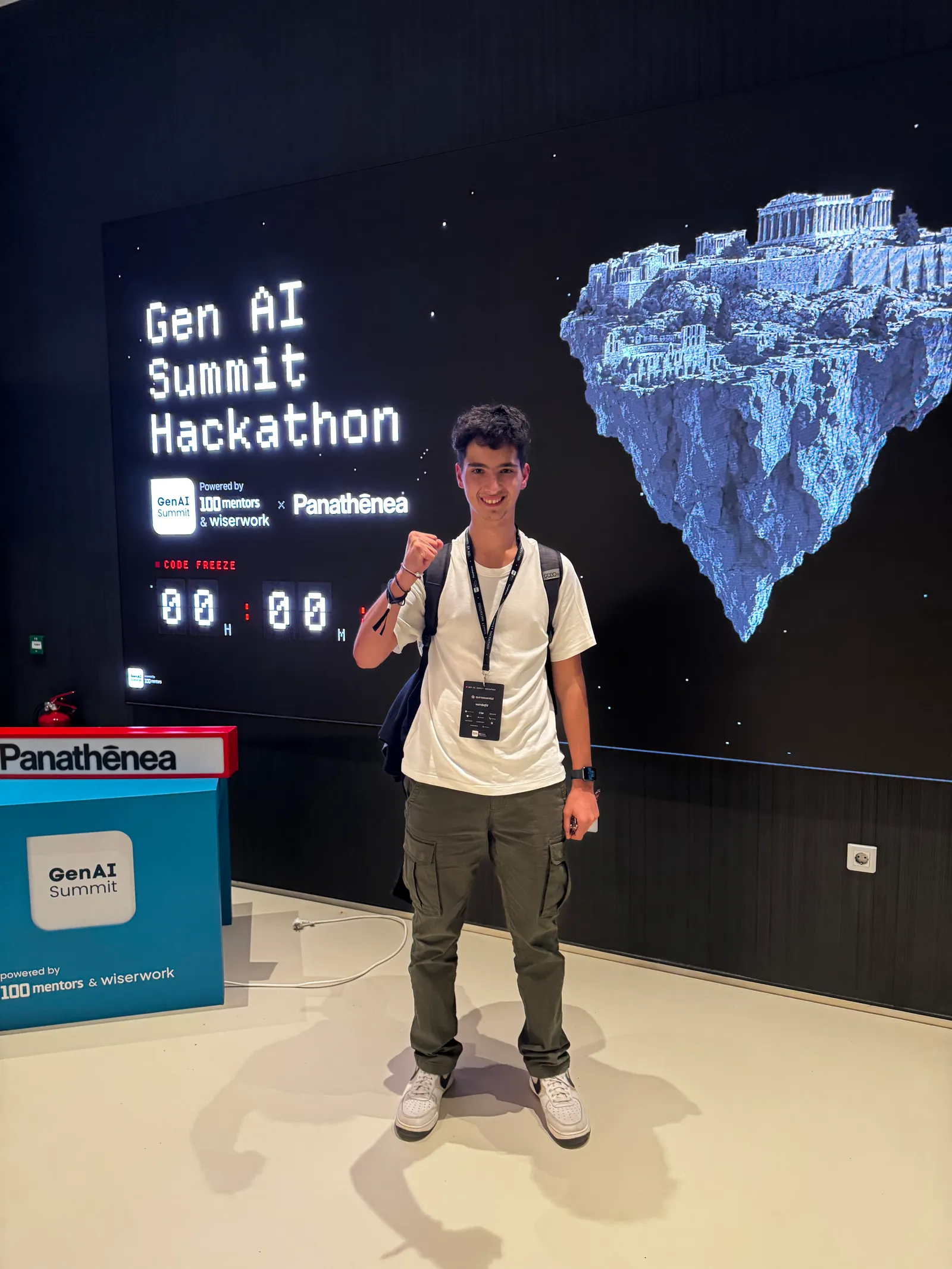
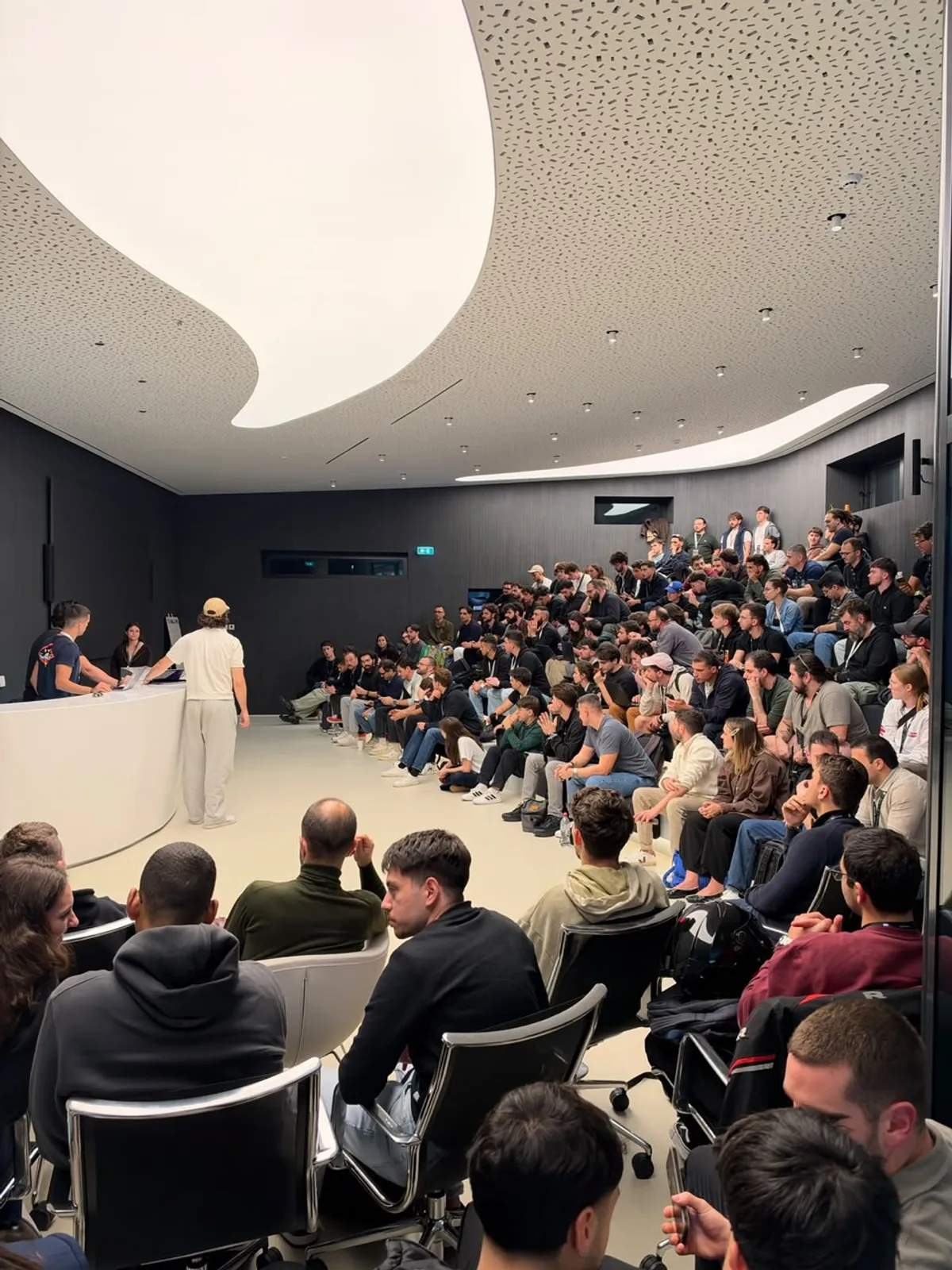
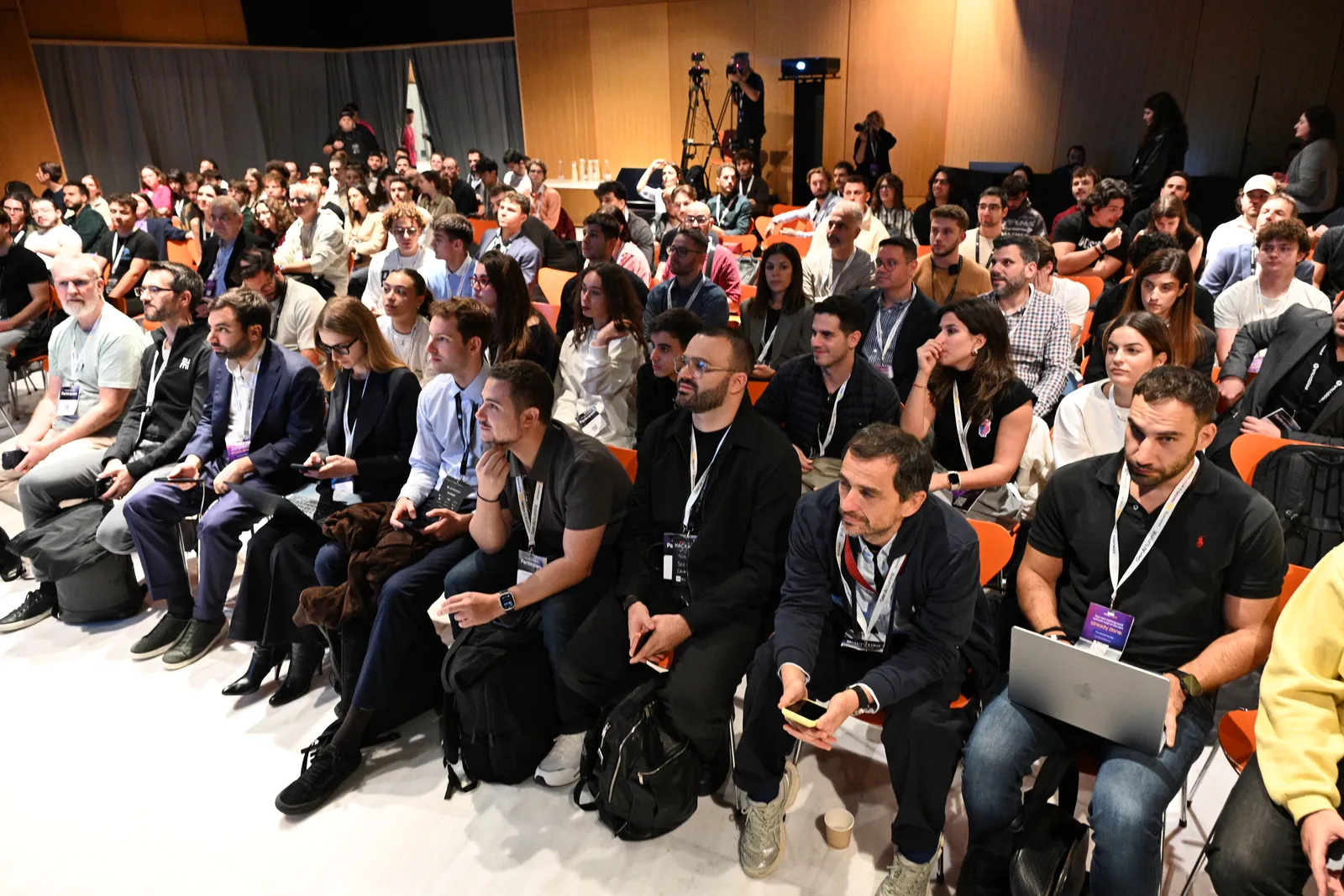
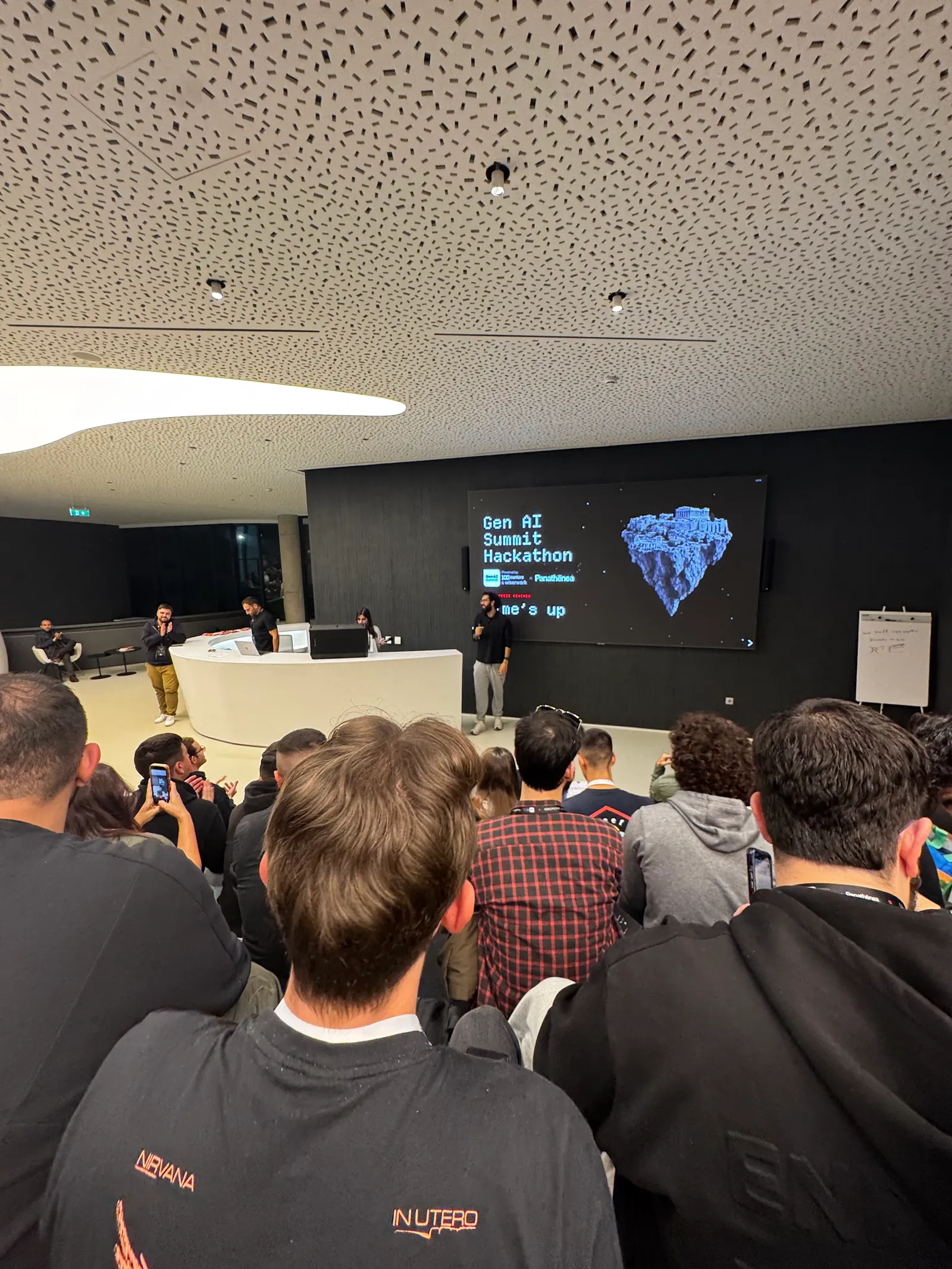
FIREYE on the summit stage
What FIREYE is
FIREYE is a wildfire command console for fire chiefs and incident commanders.
In the first hour of a fast-moving fire, information comes from everywhere at once: radio, cameras, drones, weather sensors, news. It arrives late, out of order, with no indication of how old or reliable it is. FIREYE brings everything together on a single 3D satellite map. The demo runs fourteen simulated camera sources: 6 drones, 2 stations and fixed cameras, across 20 registered channels.
There is also a resident view. It replays the Mati, Greece fire of 23 July 2018 as a simulation. A resident sees where the fire is, gets staged alerts (MONITOR, PREPARE TO LEAVE, LEAVE NOW), a fire ETA, and a "leave by" time set 45 minutes before that ETA. It offers Fastest, Safest and Balanced routes on the OpenStreetMap road graph, avoiding road segments the simulated fire reaches before you would pass them, with a 15-minute margin. Then it hands off to Google Maps.
The safety design was deliberate. Resident stages and wording are deterministic. The agents (Chief, Scout and an orchestrator) explain the picture with scripted replies. No live AI-generated evacuation orders. Drone tasks need human approval, and the backend enforces it.
The limits, stated plainly: it is an exercise prototype and a simulation. Not official advice. Not validated forecasts. The data providers are dormant and the thermal imagery is false-colour simulation.
Stack: TypeScript, Cesium for the 3D map, OSM roads, a PWA, a Node backend. Built with AI coding agents (Devin, Claude Code, Codex), with me directing.
- Repo: github.com/nikolas-sapa/FIREYE
- Live demo: resident view
- Demo video: youtu.be/F1bdtWd3L4o
The honest post-mortem
Execution volume was not our ceiling. We built a lot in 36 hours. The ceiling was the project and the presentation.
Two lessons.
One wow moment. A judge watching a 3-minute pitch remembers one thing. FIREYE had many good parts: the map, the sources, the routing, the approval gate. Many good parts read as a tour. Next time I build the demo around a single 30-second moment that lands, and everything else supports it.
Pitch the wedge, not the architecture. An architecture tour explains how it works. A finals pitch has to say who needs it first and where it goes from there. Architecture is what you show when someone asks. The market and the wedge are what you lead with.
Neither of these is about working harder. Both are decisions.
Congratulations
To the top three: Otty in 1st, Steptrace in 2nd, Flux in 3rd. Well earned.
Thanks to Polymath Labs for running it, and to Marco for building it with me.
4th of 47 is a good result. Knowing exactly why it was not 1st is the more useful one.